What is meningitis
Meningococcal disease starts with a bacterium called Neisseria meningitidis. Most people who carry it never know it. It lives quietly in the back of the throat for days or sometimes months, doing nothing at all.
Then, for reasons researchers still can't fully predict, it stops being harmless. The bacteria cross into the bloodstream, or into the fluid surrounding the brain and spinal cord.
Meningitis is inflammation of the protective membranes around the brain and spinal cord. Septicemia is a bloodstream infection that can shut down organs in a matter of hours. Some people get one. Some get both.
Most illnesses give you time to think. This one can take a person from feeling slightly off in the morning to critically ill by dinner. Jamie went from feeling flu-ish to fighting for her life in under a day.
People use these interchangeably, though they describe different things. Meningitis is the inflammation itself, and it can be caused by viruses, bacteria, fungi, or other organisms. Meningococcal disease is one specific bacterial infection, and because it moves so quickly it ranks among the most serious causes.

Know what you're looking at
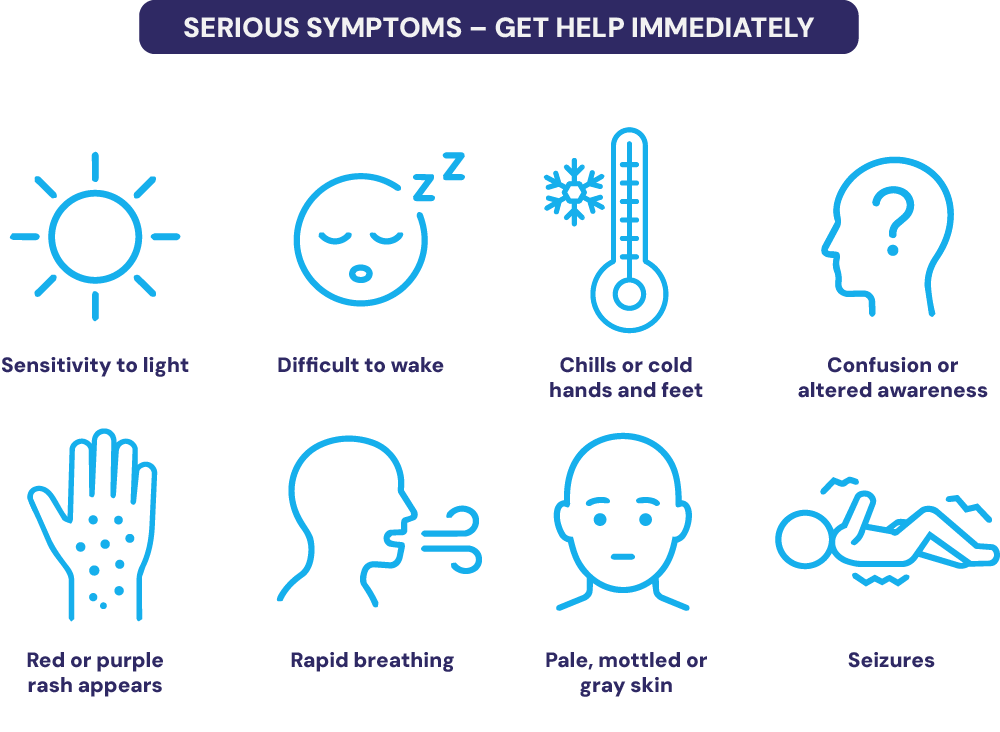
- High fever
- Severe headache
- Stiff neck
- Nausea or vomiting
- Sensitivity to light
- Confusion
- Extreme fatigue
- Cold hands and feet
- A purple or red rash that doesn't fade when pressed
Even with fast, modern treatment, the case-fatality rate for meningococcal disease runs about 10 to 15 percent. Among those who survive a severe case, the aftermath can include limb loss, hearing loss, brain injury, and organ damage.
The rash is the symptom everyone knows, and it's also the one you can't count on. It often starts as small red or purple spots that spread into larger, darker patches. Unlike most rashes, it may not fade when pressed with a clear glass, the so-called glass test.
But plenty of people never develop one. Jamie didn't have the classic warning signs. If meningococcal disease is suspected, waiting to see whether a rash appears is not a safe strategy.
If symptoms are worsening fast, or if severe headache, stiff neck, confusion, light sensitivity, or a rash appear, seek emergency care immediately. Say out loud that you're concerned about meningitis. Treatment is aggressive IV antibiotics started the moment the disease is suspected, because there's no waiting on lab results when hours matter this much.
The vaccines that cover all five serogroups
Five serogroups cause most meningococcal disease worldwide: A, B, C, W, and Y. In the United States, three vaccine types protect against them.
- MenACWY covers serogroups A, C, W, and Y
- MenB covers serogroup B
- MenABCWY, a newer pentavalent vaccine, covers all five in a single shot
For years, full protection meant two separate vaccines and often two separate visits. That gap is part of why so many teens end up protected against ACWY and unprotected against B. Anyone receiving MenACWY and MenB at the same visit can now receive MenABCWY instead.
- Ages 11–12: first dose of MenACWY
- Age 16: MenACWY booster
- Ages 16–23, preferred 16–18: talk with your provider about MenB
The MenACWY booster does not protect against serogroup B. If MenB is on the table at the same visit, ask whether MenABCWY makes sense.
Anyone can develop meningococcal disease. Risk runs higher for infants, teenagers and young adults, college students living in residence halls, military recruits, people with certain immune conditions, travelers to areas where the disease is more common, and anyone exposed during an outbreak.
Behavior matters too. Living in close quarters, sharing drinks, utensils, vapes or lip products, kissing, and frequent close social contact all increase exposure. Smoking, including secondhand, makes you more likely to become a carrier.
Vaccination is the strongest protection available. Alongside it: wash your hands, don't share drinks or personal items, stay home when you're sick, and get medical attention quickly if symptoms develop.
Primary care and pediatric offices, family medicine clinics, pharmacies (age rules vary by state), local health departments, college and university health centers, and some community clinics. Most private insurance, Medicaid, and many public health programs cover recommended meningococcal vaccines with little or no out-of-pocket cost.
Ask your provider to review your records. If records can't be found, receiving another dose is generally considered safe, and your provider can advise based on your age and health history.


Meningitis B
For years, available vaccines protected against several strains of meningococcal disease but left out serogroup B, a major cause of cases in adolescents and young adults. Vaccines targeting serogroup B became available in the United States in late 2014.
More recently, pentavalent MenABCWY vaccines arrived, covering all five serogroups in one shot. When a teen is due for both MenACWY and MenB at the same visit, that combined option is worth asking about.
What to do
Ask your provider directly: have I had the MenB vaccine, not just MenACWY? Then make sure your teen is protected against all five vaccine-preventable serogroups.
Risk changes with age. The conversation shouldn't stop.
Infants
Although the disease is rare overall, infants have among the highest rates of meningococcal disease. Developing immune systems make them especially vulnerable to severe infection. Infants with certain risk factors may be recommended for vaccination earlier than the routine schedule, so ask your pediatrician.
Children and teens
The routine schedule begins at 11 to 12 with MenACWY, with a booster at 16. Adolescence is also when the MenB conversation should start, ideally before a teen leaves for college rather than during move-in week.
Adults
There's no routine adult schedule. CDC recommends meningococcal vaccination for adults at increased risk, and that category covers more people than most adults assume.
Both MenACWY and MenB are recommended if you have a complement component deficiency, functional or anatomic asplenia, an inhibited complement system because of certain medications, or routine occupational exposure to Neisseria meningitidis, which in practice means microbiologists.
MenACWY alone is recommended if you have HIV, are part of a population at increased risk during an outbreak, are a military recruit, are a first-year college student living in a residence hall, or are traveling to a country where the disease is common.
MenB alone is recommended for adults identified as part of a population at increased risk during a serogroup B outbreak.
Anyone receiving MenACWY and MenB at the same visit can receive MenABCWY instead.
Additional Information
If you're pregnant or Breastfeeding:
Women at increased risk for A, C, W, or Y disease who are pregnant may receive MenACWY. Providers generally defer MenB and MenABCWY during pregnancy, though women at increased risk for serogroup B who are pregnant or breastfeeding may receive MenB after weighing benefits and risks with their provider. This is a conversation for your OB rather than a decision to make from a website.
Boosters:
Booster doses are generally recommended for as long as you remain at increased risk. If a risk factor applies to you, ask your provider when your next dose is due.
The Bottom Line:
Anyone, at any age, can develop meningococcal disease. If you don't know your vaccination status, or your child's, that's the conversation to have at your next appointment.