The Physical Cost
The physical cost of meningitis is the most visible part of my story. My fingers and both of my legs below the knee were amputated. But the amputations didn't happen immediately. I survived meningococcal septicemia, and I watched my body physically change in front of me. What started as a red rash became purple. Then parts of my body turned black as tissue began to die.
I remember my limbs feeling extremely cold during my first night of being sick, before I ever made it to the hospital. At the time, I didn't understand what was happening inside my body. My body was in crisis. The infection and septicemia severely affected my circulation, and my extremities suffered devastating damage. I watched my limbs decay. There is no easy way to describe what it is like to look at your own body and physically see tissue dying.
My amputations didn't happen until months into my hospital stay. At the time, part of me thought life might become easier after surgery. The damaged tissue would finally be gone. Maybe this would be the turning point. But recovery was incredibly difficult.
Physical therapy was not my favorite place to be. Actually, it was hard. Really hard. But I still had to show up. Every day, I had to work on my mobility, strength, flexibility, and ability to function in a body that had completely changed.
My rehabilitation team emphasized the importance of putting effort into my recovery after surgery. For me, committing to physical therapy early in my recovery played an important role in my mobility and the walking gait I have today. If you are preparing for or recovering from an amputation, work with your medical and rehabilitation team and take your physical therapy seriously. You may hate it some days. I know I did. But for me, the work mattered.
Getting fitted for my first prosthetic legs came with an entirely new set of physical challenges. But honestly? I was excited. I missed seeing something at the end of my legs that looked like a foot. Prosthetics were different. They were unfamiliar. I had to learn how to use them. But to me, they represented one step—no pun intended—closer to independence.
I spent three weeks in inpatient rehabilitation and then continued with approximately six months of outpatient rehabilitation. I wasn't only learning how to walk again. Because my fingers had also been amputated, I was participating in occupational therapy and learning how to use my hands differently. Which presented an interesting question: How was I going to put on my prosthetic legs when I didn't have fingers?
When you think about losing your feet, walking may be the first physical challenge that comes to mind. But our hands are involved in almost everything we do. Getting dressed. Buttons. Zippers. Feeding yourself. Bathing. Brushing your hair. Brushing your teeth. Working out. Playing sports. Using our phones. Using equipment.
Suddenly, everyday tasks that I had performed without thinking required thought, problem-solving, and practice. At first, it was discouraging. Everything felt new. But the human body—and the human mind—can be incredibly adaptive. I learned. I found different ways to do things. Tasks that once felt like massive problems slowly became part of my normal routine. And eventually, instead of focusing only on what was difficult, I became excited about what I was able to do again. Yes, I may do something differently. That doesn't mean I can't participate.
Today, one of the most important relationships in my physical life as an amputee is the relationship I have with my prosthetist. Your prosthetist is helping create the equipment you use to stand, walk, and move through your day. Communication matters. What hurts? Where are you feeling pressure? Are you developing blisters? Does something feel wrong? What needs to change?
I have learned to communicate very clearly during my socket fittings. I speak up about what is painful, what feels comfortable, and what needs to be adjusted. For me, that communication has made an enormous difference. Today, my prostheses are pretty great. I may occasionally develop a blister or experience discomfort, but those issues are much fewer and farther between than they once were. A good prosthetic fit can make a significant difference in your day-to-day mobility, and I encourage amputees to communicate openly with their prosthetic care team about what they are experiencing.
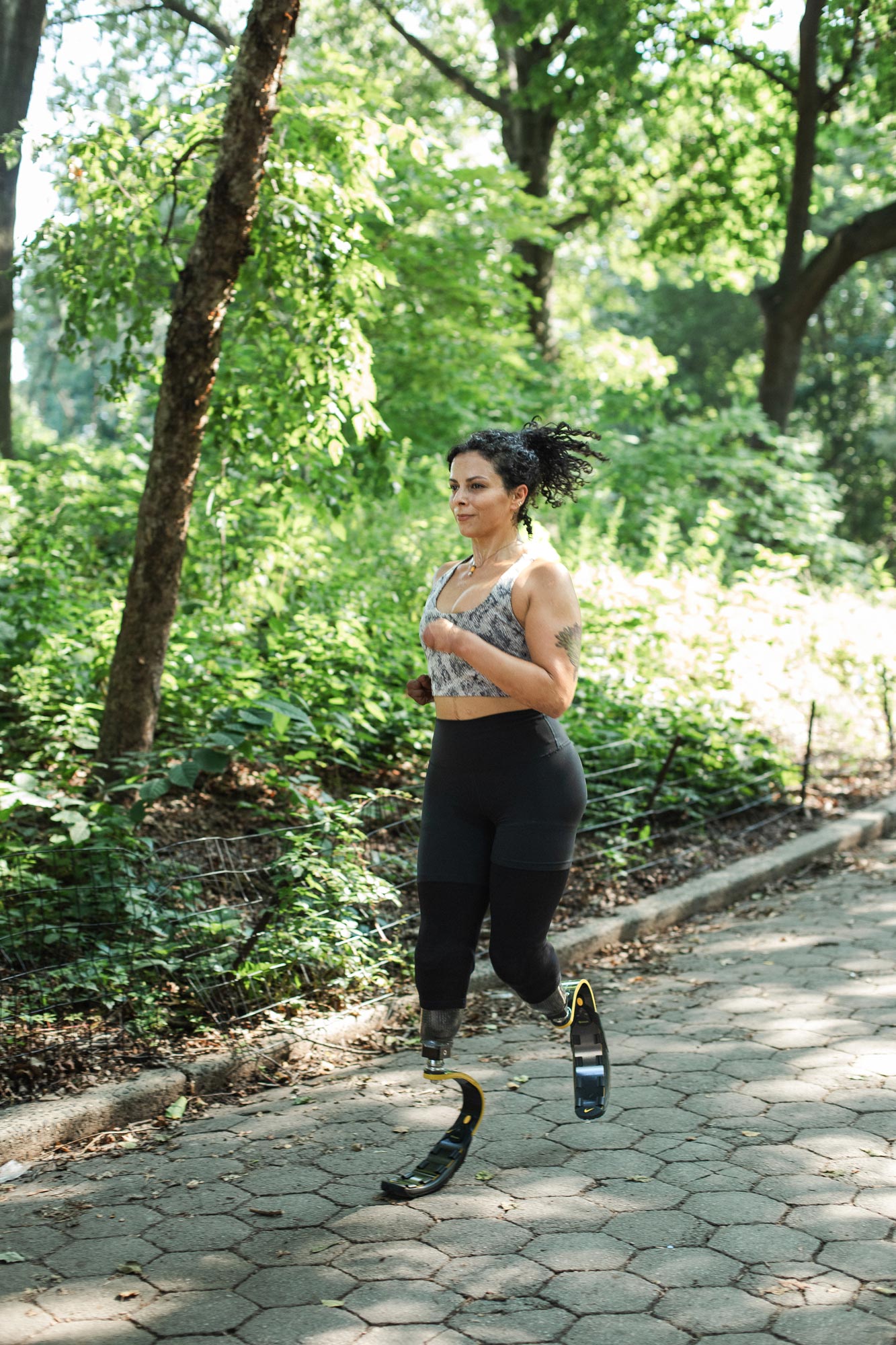
Every morning, I put on my legs. And then I live my life. I drive. I work out. I cycle. I run. I rock climb. I walk around New York City and can easily average thousands of steps in a day. When I try something new, I may need a little extra time to figure out how my body is going to do it. That's okay. I adapt.
Nearly two decades after meningitis, the physical consequences of the disease are still part of my everyday life. I will always be an amputee. I will always have severe scarring. I will always put my prosthetic legs on to walk. But I am also fully independent. My body works differently than it did before meningitis. Different does not mean incapable.
The physical toll of meningitis changed my body forever. Learning what this body is capable of has been one of the greatest challenges—and greatest gifts—of my life. And I am incredibly grateful for what I am able to do today.
The Mental Cost
Surviving meningitis came with a mental cost I could never have prepared for. There was the adjustment to a new reality. I watched my body change and decay in front of my eyes. At the same time, I watched what my illness was doing to my family and friends.
And then came the questions about my future. How would I fit into this life? Would someone want to continue life with me? Would people want to spend time with me when my body looked so different? How will I comfortably meet someone in this new body?
I know what those thoughts look like. I know what denial looks like. I know what it feels like to look at your body and barely recognize the person looking back at you.
For me, becoming a quadruple amputee also meant learning to use prosthetics. These were new pieces of equipment that I was expected to use every day just to walk and move through the world. Getting comfortable with them was incredibly difficult.
My mental adjustment to this new life took time. I would say it took me six months to a year to begin feeling comfortable in my new body and to learn how to use it to the best of my ability.
But don't get me wrong. I am almost two decades into life after meningitis, and I still have moments of discomfort when people stare. I am human. However, I don't hide who I am. I am strong. I am independent. And, yes, I actually like being unique.
But there are still hard days. There are days when I don't love standing out. I don't always love the stigma that can come with having a visibly different body.
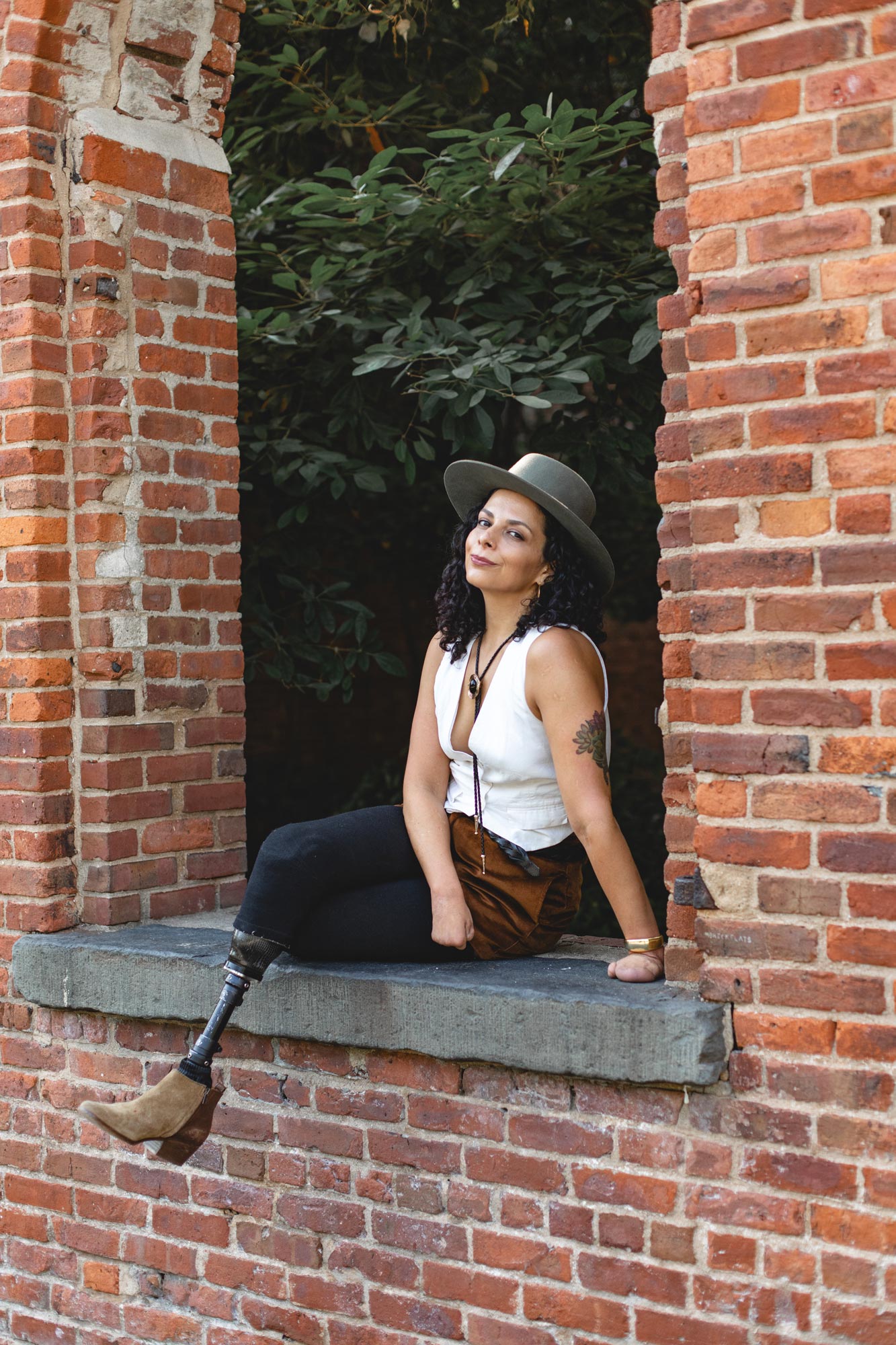
There was a time when I hid my prosthetic legs. I wore pants to cover them because I didn't want people to see. And somewhere along the way, I also started asking myself why I was working so hard to hide my legs in the first place. My legs were my legs. Showing them was okay. There was nothing to hide.
Once I learned to accept my reality instead of constantly resisting it, life became easier. That doesn't mean the hard parts disappeared. It doesn't mean I suddenly loved everything that happened to me.
Acceptance, for me, meant asking a different question: How do I make the best of this situation? What can I do to take control of my life?
I have been fortunate to develop that perspective, and it has helped me overcome a lot.
My story is different from every other survivor's story. My way of processing what happened may not be someone else's way. But I believe everyone's emotions are valid, and everyone deserves the time and space to emotionally recover.
In some ways, life after meningitis can feel like saying goodbye to the person you once knew and learning how to say hello to the person you are becoming. That takes time.
I can only speak from my own experience. But I also know I am not the only person who has questioned their future, struggled with a changing body, or wondered where they fit after a life-changing illness.
There is a very real mental and emotional cost to surviving meningitis.
If you are navigating life after meningitis or limb loss and some of these thoughts feel familiar, I want you to know that I am willing to be a resource. I am a certified amputee peer visitor, and I understand the value of talking with someone who has lived through some of these experiences.
Sometimes, you don't need someone to tell you how to feel. Sometimes, you just need someone who understands why you feel that way.
Today, I have learned to accept who I am as an amputee—and I carry that with pride. I don't hide who I am.
I wear shorts probably 90 percent of the time. I have even found prosthetic feet with adjustable heel heights that allow me to wear heels up to three and a half inches. I am comfortable with who I am. And I'm not going to lie—I turn heads. It’s not because of my disability. I believe confidence has a lot to do with it.
These days, I am in the gym almost every day, and physical activity has become an important part of my mental well-being.
Getting stronger has changed my life as an amputee. Strengthening my quads and glutes has improved my walking gait and helped me become stronger when climbing stairs. And let me tell you—I know how difficult stairs can be.
I freaking hated them.
There was a time when stairs felt like this massive obstacle in front of me. But I worked at it. I got stronger. I learned my body.
Today, I cycle. I rock climb. I work out. I take on challenges that sometimes require me to completely rethink how something is traditionally done.
Like anything new, it may take me a minute to figure it out. But I adapt. I find a way. And I overcome it. Maybe that's because I genuinely love a challenge.
I have learned to communicate very clearly during my socket fittings. I speak up about what is painful, what feels comfortable, and what needs to be adjusted. For me, that communication has made an enormous difference. Today, my prostheses are pretty great. I may occasionally develop a blister or experience discomfort, but those issues are much fewer and farther between than they once were. A good prosthetic fit can make a significant difference in your day-to-day mobility, and I encourage amputees to communicate openly with their prosthetic care team about what they are experiencing.
For me, the mental and emotional cost of life after meningitis hasn't completely disappeared. I have simply learned how I want to carry it.
I don't allow every hard thing to weigh me down. I try to learn from it.
That doesn't mean I don't have difficult days. It doesn't mean everyone should process trauma the way I have. This is simply the perspective I have developed through my own experience.
I am who I am today because I learned how to face challenges with pride.
I learned that my body could be different and still be powerful.
And I learned that accepting my reality didn't mean giving up.
For me, acceptance was when I finally started taking my life back.
The Financial Cost
I was fortunate to have health insurance when I became sick with meningitis. But being insured did not mean everything was covered—and it certainly did not mean survival came without a financial cost.
I spent seven months in the hospital.
Think about the cost of seven months of hospital care, surgeries, rehabilitation, medications, and specialists. Then think beyond the hospital bill.
My family drove to the hospital every day. They brought food. They rearranged their lives to care for me and be by my side. There are countless expenses families take on when someone they love becomes critically ill—many of which will never appear on a medical bill. And then there is the cost of mental health care and therapy, an important part of processing the trauma and rebuilding a life after a life-changing illness.
And the financial toll doesn't end when you leave the hospital.
After meningitis, I had to learn how to navigate life as a quadruple amputee. Because I no longer had fingers, even a standard wheelchair didn't fully meet my needs. I needed a customized wheelchair with modified wheels and knobs that allowed me to independently push my chair.
That was only the beginning.
There were countless prosthetic appointments, fittings, adjustments, replacements, and conversations with insurance companies. Over the years, I learned that having insurance does not necessarily mean having access to every piece of equipment that could improve your life.
Often, you are given access to the prosthetic feet and components an insurance company determines are medically necessary and will cover.
But what about running? Swimming? Climbing?
Activity-specific prosthetics are often considered medically unnecessary and may not be covered by insurance. For an amputee who wants to return to sport, exercise, or a specific activity, that can mean paying thousands of dollars out of pocket or simply going without.
Navigating insurance can feel like a job of its own.
Medicare. Medicaid. Private insurance. Prior authorizations. Denials. Appeals. Documentation.
There can be an enormous amount of red tape between a survivor and the equipment or care they need.
I know how frustrating it is to go through these hurdles as an amputee. I have spent years navigating prosthetic care and learning what insurance will—and will not—cover.
But I have also learned that a denial does not always mean the end of the road.
There are nonprofit organizations, from local community programs to national efforts, that help fund activity-specific prosthetics and adaptive equipment. Some organizations provide grants. Others help connect amputees with resources and opportunities.
It is important to look at what may be available in your own community and nationally. Ask questions. Talk to your prosthetist. Search for adaptive sports organizations and prosthetic funding programs. Learn about appeal options when coverage is denied.
The red tape can be exhausting, but it is not always impossible to cut through.
Life after meningitis looks different for every survivor.
Some survivors experience hearing loss, vision loss, neurological or cognitive challenges, severe scarring, amputations, and other long-term complications. I live with amputations and severe scarring, but my experience represents only one possible outcome of meningitis.
This is simply my story.
For me, the financial toll of meningitis has extended far beyond a seven-month hospital stay. It has followed me into rehabilitation, prosthetic care, adaptive equipment, athletics, and nearly every stage of rebuilding my life.
Surviving meningitis saved my life.
Learning how to afford life after meningitis became another challenge entirely.
Today, I am fortunate that the day-to-day financial burden of being an amputee is not as significant for me as it once was.
But that doesn't mean the costs have disappeared.
I have also learned that sometimes you have to look beyond traditional insurance coverage and find organizations that understand the needs of amputees.
I partnered with Stronger Than You Think, a nonprofit dedicated to helping amputees access activity-specific prosthetics. They have been wonderful and have helped me access equipment that traditional insurance may not consider medically necessary.
Through my rock climbing team, I have also benefited from support from Evolv, which provided the prosthetic feet I use for climbing.
These partnerships have allowed me to participate in activities I love without carrying the entire financial cost on my own.
That is why I encourage other amputees to look into the resources available to them. Work the system! There are nonprofits, adaptive sports organizations, community programs, and sponsors doing incredible work.
Sometimes, you just have to know where to look—and who to ask.
There can also be unexpected costs.
In 2021, I began experiencing significant pain in my leg. I eventually learned that I had developed a bone spur while dealing with an ill-fitting prosthetic.
The pain became severe enough that I ultimately had to have my leg re-amputated.
That meant another surgery. More recovery. And another financial chapter.
After surgery, my body had changed. I needed new prosthetic sockets that fit my newly amputated leg and allowed me to walk again.
This is one of the realities of long-term prosthetic care: your needs can change.
A prosthetic leg is not something you receive once and simply use for the rest of your life. Bodies change. Residual limbs change. Components wear down. Medical complications can happen.
And when something changes, there can be a cost attached to it.
Nearly two decades after meningitis, the physical consequences of the disease are still part of my everyday life. I will always be an amputee. I will always have severe scarring. I will always put my prosthetic legs on to walk. But I am also fully independent. My body works differently than it did before meningitis. Different does not mean incapable.
The physical toll of meningitis changed my body forever. Learning what this body is capable of has been one of the greatest challenges—and greatest gifts—of my life. And I am incredibly grateful for what I am able to do today.
I also live with hyperhidrosis, which causes excessive sweating.
For me, sweating can be especially challenging when wearing prosthetic legs. When I work out, I can sweat significantly inside my prosthetic sockets. Sometimes, I have to take my legs off just to towel off and then put them back on.
It may sound like a small inconvenience, but when prosthetics are part of how you move through the world every day, these things matter.
I currently receive Botox treatments in areas where I experience excessive sweating, and I am exploring treatment for my legs as well.
Again, there is a cost associated with that care.
These are the types of expenses people may never think about when they think about life after meningitis or life as an amputee.
For me, thankfully, I don't currently carry a significant number of additional day-to-day financial burdens because of my amputations.
And I am grateful for that.
But nearly two decades after surviving meningitis, I still have prosthetic appointments. I still have unexpected medical needs. I still have to think about what insurance will cover and what it won't.
The financial cost of survival doesn't always arrive as one large bill.
Sometimes, it follows you in pieces throughout your life.
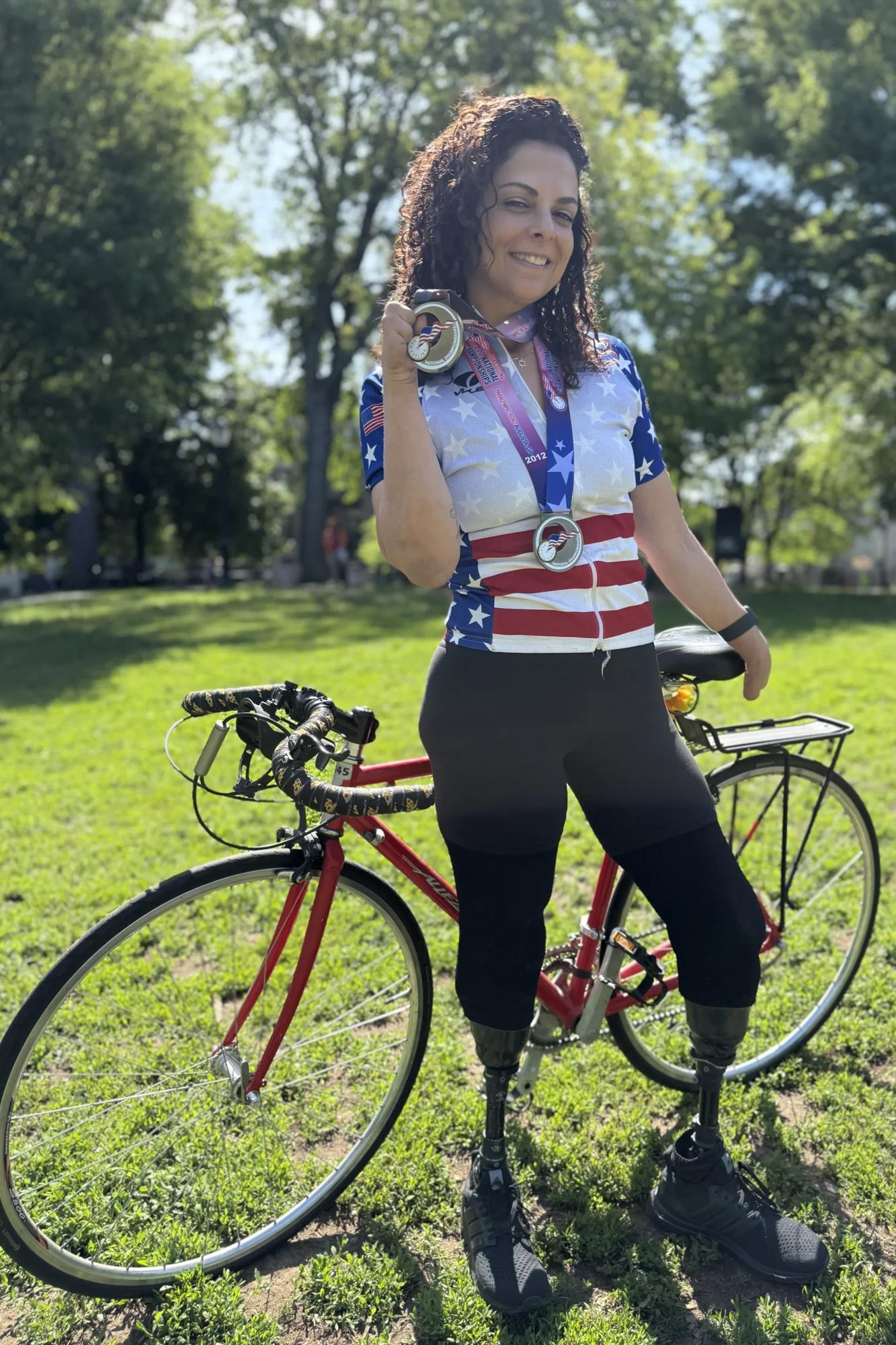
As an Athlete
Before meningitis, I was an average athlete. I played sports growing up, but nothing that suggested I would one day represent the United States on the international stage. While attending the University of Texas in Austin, I developed a love for cycling, using my bicycle as my primary way of getting around campus and the city.
When meningococcal disease changed my life in November 2008, I honestly didn't believe I would ever ride a bike again. During my seven-month hospitalization, I met an occupational therapist who also happened to be a Paralympic cyclist. At a time when I couldn't imagine walking again—let alone competing—he believed in me. He saw possibilities that I couldn't yet see for myself, and that belief became the foundation for what came next.
In 2009, I left the hospital and learned to walk again on my prosthetic legs. In 2010, I got back on a bicycle. By 2011, I was wearing the USA Cycling jersey.
My first cycling event after recovery was the Livestrong Challenge in Austin, where I completed the 12-mile ride. Crossing that finish line wasn't about speed—it was proof that my life wasn't over.
Soon after, I attended an adaptive cycling clinic in Oklahoma, where I met the coaches who would ultimately launch my Paralympic cycling career. They invited me to compete at the U.S. National Championships in Augusta, Georgia. I won the gold medal in my classification. That race changed everything.
A few months later, those same coaches invited me to train with the U.S. Paralympic Cycling Team at the Home Depot Center Velodrome in Carson, California. Training alongside some of the country's best athletes pushed me further than I ever imagined possible. Just weeks later, I represented Team USA at the 2011 Parapan American Games in Guadalajara, Mexico.
At the 2011 Parapan American Games, I competed in four events: 12-mile road race, 24-mile road race, 800-meter velodrome sprint, and 1,600-meter velodrome pursuit. While I didn't come home with a medal, I achieved personal records throughout the competition and experienced what it meant to compete internationally for my country.
The following year, I returned to the U.S. National Championships in Augusta and earned a silver medal.
After the 2012 cycling season, I stepped away from competitive racing to finish school and focus on building my career. While athletics took a back seat for a while, my desire to challenge myself never disappeared.
In 2020, I began a new fitness journey. I wanted to become healthier, stronger, and see what my body was still capable of. Every milestone made me ask the same question: "If I can do this… why stop here?"
That mindset continues to shape who I am today. Whether it's strength training, running, climbing, or one day competing in HYROX, I'm always curious about what's possible—even if I have to do it differently than everyone else.
Getting stronger wasn't just about spending more time in the gym. It also meant solving one of the biggest challenges I'd faced since surviving meningococcal disease: finding prosthetic sockets that truly fit.
Because of the severe tissue damage and extensive scarring caused by meningococcal septicemia, my residual limbs have always been difficult to fit comfortably. For years, I accepted pain as part of daily life because I didn't know there were better options.
Everything changed in 2023. After exploring a different prosthetic approach, I was finally fitted with sockets that truly worked for my body. For the first time since my amputations, I understood what comfortable prosthetic sockets could feel like. Instead of simply getting through the day, I could finally start pushing my body again. I found myself lifting heavier, training harder, and eventually running.
In 2025, I connected with Stronger Than You Think, a nonprofit dedicated to helping adaptive athletes obtain activity-specific prosthetic equipment. Through their support, I received my first pair of running legs.
Running had always felt like something that belonged to my life before meningitis. Suddenly, it became part of my future again. Every new piece of adaptive equipment reminds me that mobility isn't just about walking—it's about having the opportunity to participate, compete, and discover what you're capable of.
After moving to Brooklyn, I wanted to become more involved in my local adaptive sports community. Through organizations like Achilles International and local adaptive climbing events, I discovered para climbing. I immediately fell in love with the sport.
Climbing is physical, technical, and mentally demanding. Every route presents a new puzzle, and every hold requires problem-solving. It constantly challenges me to adapt, learn, and trust my body in new ways.
In early 2026, I began competing in para climbing and earned a spot on Team USA Para Climbing in the AU3 classification. I am currently competing in my first IFSC Para Climbing World Series season, representing the United States on the international stage. With para climbing making its Paralympic debut at the Los Angeles 2028 Paralympic Games, I have set my sights on qualifying to compete on home soil.
I'm especially grateful for the adaptive sports community I've found here in Brooklyn. There are so many athletes who encourage one another, share knowledge, and make sports more accessible. If you're living with a disability and are curious about trying something new, I encourage you to do a quick search for adaptive sports in your own community. Whether it's climbing, cycling, rowing, skiing, tennis, or something completely different, you might be surprised by what's out there—and by what you're capable of.
Being an athlete isn't about collecting medals. It's about staying healthy. It's about being curious. It's about refusing to let meningitis define what's possible.
I know I may have to do things differently. I may need adaptive equipment, different techniques, or a different path than someone else. But different doesn't mean impossible.
My journey has taught me that there's always another challenge to pursue, another goal to chase, and another opportunity to discover what is still possible.
As A Peer Visitor
When I woke up in the hospital after surviving meningococcal disease, I had more questions than answers. Would I ever walk again? Would people stare at me? Would I ever be independent? Would I work again? Drive again? Date again? Feel like myself again?
No one prepares you for those questions. They don't come all at once—they come every day, sometimes for months or even years. I remember lying in my hospital bed wondering what life was going to look like. I couldn't imagine life without my legs or my fingers. The future felt uncertain, overwhelming, and, at times, impossible to picture. Today, I have the privilege of sitting beside people who are asking those very same questions.
I've always found purpose in connecting with others who are facing life-changing circumstances. Whether someone has recently experienced an amputation because of illness, trauma, cancer, diabetes, or another medical condition, one of the most powerful things they can hear is: "I've been there."
Recently, I became a Certified Peer Visitor through the Amputee Coalition, allowing me to formally provide peer support to individuals adjusting to limb loss. While the certification gave me additional tools and training, the heart of this work has always been the same—meeting people where they are and helping them realize they are not alone.
Every person's journey is different, and every conversation is unique. Sometimes people want to talk about prosthetics. Sometimes they're worried about going back to work. Sometimes they're nervous about dating, parenting, returning to sports, or simply getting out of the house. Other times, they don't have questions at all—they just need someone to listen.
There isn't a script. I'm simply there to offer perspective, answer questions honestly, and remind people that recovery isn't about becoming who you were before. It's about discovering who you can become next.
I partner with hospitals, rehabilitation centers, prosthetic providers, and physical therapy clinics to support individuals and families navigating limb loss. Healthcare professionals provide outstanding medical care. Peer visitors provide something different—we offer lived experience.
We understand what it feels like to leave the hospital for the first time, to learn how to trust a prosthesis, to experience setbacks, and to celebrate milestones that others may never notice. Sometimes hope comes from seeing someone who's simply a few years farther down the road.
People often think recovery ends when you leave the hospital or receive your first prosthesis. In reality, that's when a new chapter begins. Learning to walk again. Learning to trust your body. Learning to ask for help. Learning to become independent. Learning to laugh again.
I've lived each of those chapters, and I know they don't happen overnight. Progress isn't measured only by big milestones. Sometimes it's taking your first step. Other times it's returning to work, playing with your children, traveling, exercising, or simply feeling comfortable in your own skin again. Every one of those victories deserves to be celebrated.
If you're reading this because you or someone you love has recently experienced limb loss, I want you to know something: It is okay to grieve. It is okay to be angry. It is okay to be scared. But please know that what you're feeling today doesn't have to define the rest of your life.
There will be challenges. There will be frustrating days. But there will also be victories you can't imagine yet. I'm not here because I have all the answers. I'm here because I've walked this road, and I know how much it meant whenever someone reminded me that I wasn't walking it alone. If sharing my story or talking through your questions can make this journey feel even a little less overwhelming, then I'd be honored to be part of it.